
Furnace Installation in Barrie, Orillia & Simcoe County
Upgrade your heating with a new high-efficiency furnace. Free estimates, licensed installers, financing available.

Good · Better · Best
Furnaces We Install
Real models we install across the GTA, Barrie & Simcoe County — pick the tier that fits, and we confirm the exact unit at your free quote. No pressure, no upselling.
Gas Furnaces
Every furnace we install is high-efficiency and sealed-combustion. The real choice is how evenly and quietly it heats — a single-stage unit runs full-blast or off, while a two-stage unit with a variable-speed blower holds a steadier temperature and runs quieter.
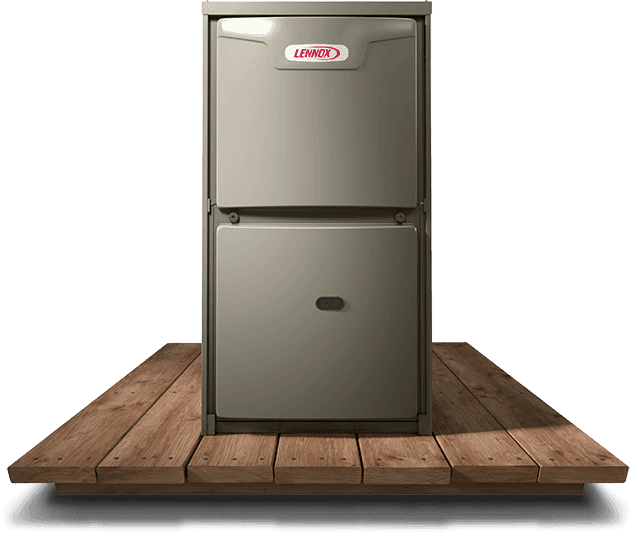
ENERGY STAR 96% AFUE with a power-saving constant-torque blower — real fuel savings without the cost of a fully modulating system. The right fit for most Toronto, Barrie & Simcoe homes.
- Efficiency
- Up to 96% AFUE
- Staging
- Single-stage
- Blower
- Power Saver constant-torque
- Certification
- ENERGY STAR qualified
93% Single-Stage Furnace
Lennox ML193E
93%
AFUE
Dependable high-efficiency heat at the best price.
96% Single-Stage Furnace
Lennox ML196E
96%
AFUE
The high-efficiency sweet spot for most homes.
97% Two-Stage Variable-Speed Furnace
Lennox EL297V
97%
AFUE
Quiet, even, two-stage comfort — the premium pick.
We size every system to your home (CSA F280) and confirm the exact model at your free in-home quote.
Repair or Replace?
Most gas furnaces last about 15 to 20 years. Inside that window, a one-off repair on an otherwise sound unit is usually the right call. The honest line to watch for is cost: when a single repair starts approaching roughly half the price of a new furnace on a unit that is already a decade or more old, you are better off putting that money toward a new system than into an old one.
One thing is not a judgment call. A cracked heat exchanger means replace, not repair — the heat exchanger keeps combustion gases, including carbon monoxide, separated from the air blown through your home, and a crack is a safety hazard. If we find one, we shut the unit down and talk replacement.
Replacing is also the natural moment to look wider than a like-for-like swap. A new high-efficiency furnace is the dependable deep-cold backstop for an Ontario winter — and especially in Simcoe County, where it gets colder than downtown Toronto. If you are open to it, this is also the point to consider a heat pump or a dual-fuel setup that keeps the furnace as backup. We lay out the options plainly at the quote — no pressure toward the most expensive one.
Signs It May Be Time to Replace
The Choices You Actually Make
“Which furnace” is really a handful of smaller decisions. A few are set by your home and not up to preference; the ones that matter for comfort and cost are below. We walk through each with you at the quote.
Burner staging — how the heat is delivered
Single-stage
Full-blast or off — nothing in between. It is the most affordable furnace to buy and runs reliably. Best for a smaller or well-insulated home, or anyone wanting the lowest upfront cost.
Two-stage
Runs on high or low depending on the weather, so it holds a steadier temperature and is quieter on milder days. This is the mainstream comfort pick for most Ontario homes — a clear step up without jumping to the top of the range.
Modulating
Adjusts the flame in fine increments and runs long and low, which gives the most even, quietest heat. It is the priciest option and makes the most sense for long-term owners who will notice and value the difference.
Efficiency (AFUE)
AFUE is the share of fuel a furnace turns into heat — 96% AFUE means about 96 cents of every dollar of gas becomes heat in your home rather than going up the vent. A high-efficiency condensing furnace at 96%+ AFUEis Ontario's practical standard, and over a long winter that efficiency is real savings. It is worth paying up to roughly 96-97%; above that the gains shrink and the price climbs.
Mid-efficiency (around 80% AFUE) only really comes up for a specific venting situation where a high-efficiency unit would be difficult or costly to vent. For most homes, high-efficiency is the right answer.
Blower (the fan that moves your air)
A variable-speed ECM blower ramps up and down smoothly instead of slamming on at one speed. It is quieter, moves air more evenly, gives your air conditioner and filtration better airflow in summer, and draws less electricity over the year. An older fixed-speed PSC motor costs less but runs at one speed and uses more power. For most homes the ECM is worth it; we will tell you honestly when it is not.
Fuel
Natural gas heats most of the GTA and is usually the lowest-cost fuel. Propane is common in rural Simcoe County and costs more to run — which is often the moment to weigh a heat pump that carries most of the season more cheaply, with the furnace as backup. Electric furnaces convert nearly all their power to heat and suit homes with no gas line, but cost more to run than gas in most of Ontario, so they are rare as a primary heat source.
Configuration and sizing — set by your home, not preference
Whether your furnace is upflow, downflow, or horizontal is decided by how your ductwork and mechanical space are laid out — not something to choose. The same goes for size, and it is the part people get wrong most. We size with a CSA F280 heat-loss calculation, not a square-footage guess. Oversizing is the number-one mistake: a furnace that is too big heats fast, hits the thermostat, shuts off, then repeats — short-cycling. That means temperature swings, more wear, and no efficiency gain. Bigger is not better; correctly sized is. We confirm the right size for your home at the free quote.
Our Installation Process
Free In-Home Assessment
We inspect your current system, measure your home, and recommend the right furnace for your needs and budget.
Professional Installation
Our licensed technicians remove the old furnace and install your new system according to code, typically in one day.
Testing & Walkthrough
We test everything, program your thermostat, and walk you through the new system. All backed by warranty.
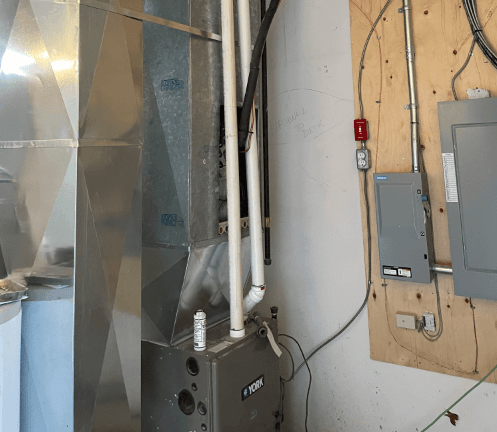
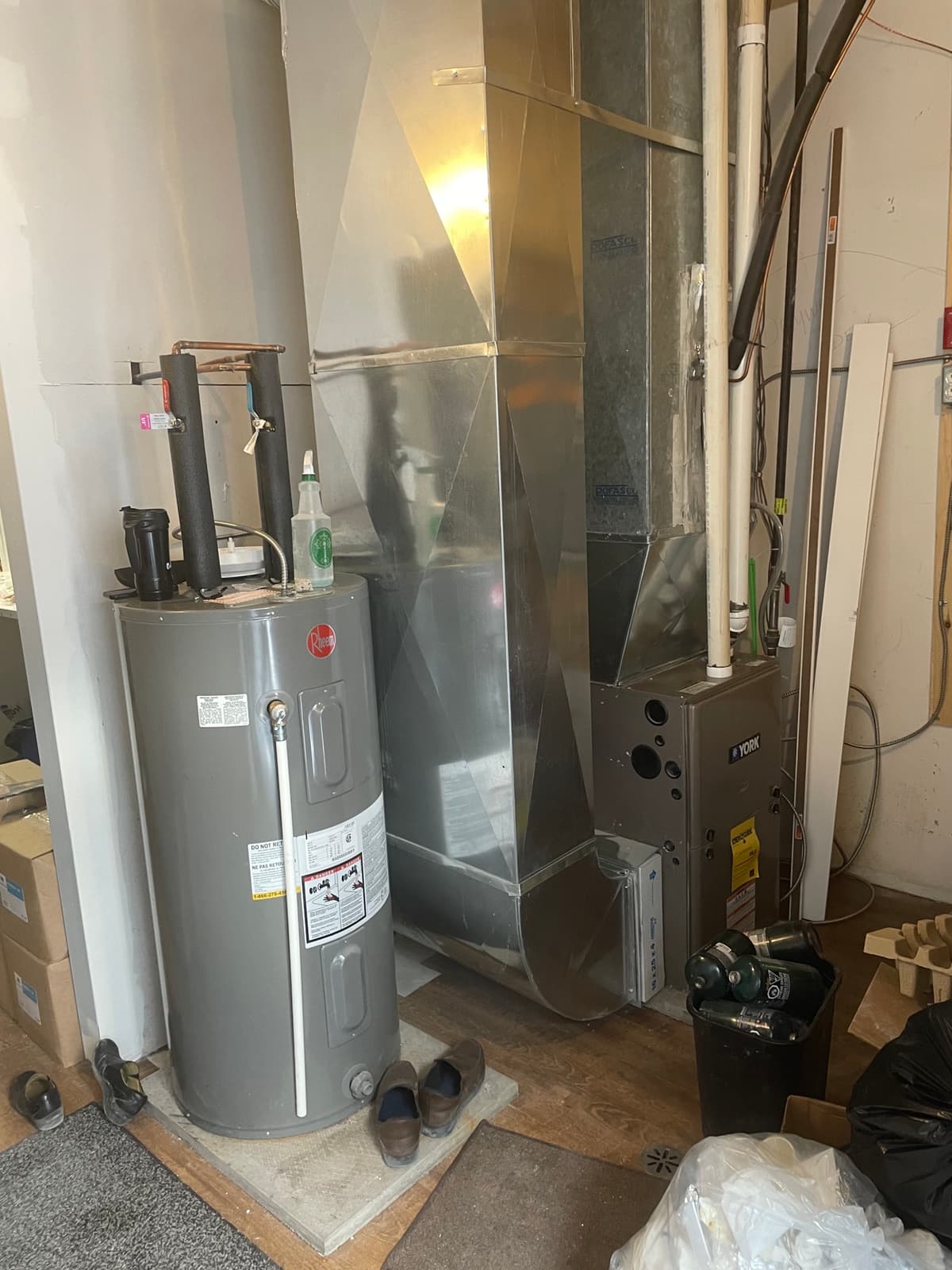
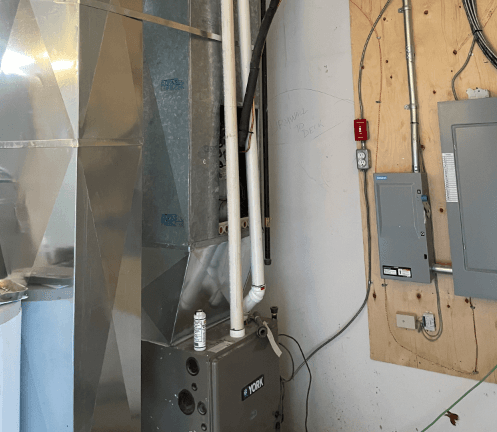
Furnace Installation — Real Work

What the Warranty Actually Covers
Furnace warranties come in a few parts, and it is worth knowing the difference before you buy. The heat exchanger — the core component — is often covered 20 years to lifetime. Parts are typically 10 years, but with a catch most homeowners miss: that full term usually requires registering the unit within about 60 to 90 days of install, or it quietly drops to 5 years. We handle or walk you through that registration so you keep the longer coverage.
Labouris separate from the manufacturer's parts warranty and comes from whoever installed the furnace. Relica Comforts backs its own labour — so if something needs attention, you are dealing with us, not chasing a manufacturer.
What a New Furnace Costs
If you are open to a heat pump, or a dual-fuel heat pump that keeps your furnace as the deep-cold backup, that pairing is worth a look in Simcoe County especially, where a high-efficiency furnace is still the reliable backstop on the coldest nights.
On cost, a new furnace in Ontario depends on the size of your home, the efficiency rating, the burner staging and blower you choose, the brand, and whether venting or ductwork needs changes. Most residential installs land between $3,500 and $7,000, and every estimate spells out the costs upfront.
We also supply the equipment, not just the labour — Relica Comforts is a full HVAC supplier and installer, so we help you choose the right brand and model for your home and budget rather than selling you up.
Need a furnace repair instead? See our furnace repair services. Also check out our AC installation and plumbing installation services.
Popular areas for furnace installation: Barrie · Orillia · Collingwood · Midland · Gravenhurst · Bradford
Get a Heating Quote
Fill out the form and we will get back to you shortly. No obligation.
Why Choose Relica Comforts?
- Licensed & insured technicians
- Upfront pricing — no surprises
- 24/7 emergency service
- Free estimates on all installations
- 5.0 stars on Google
Frequently Asked Questions

Ready for a New Furnace? Get a Free Estimate.
Call us anytime for emergency HVAC and plumbing service across Barrie, Orillia, and Simcoe County.