
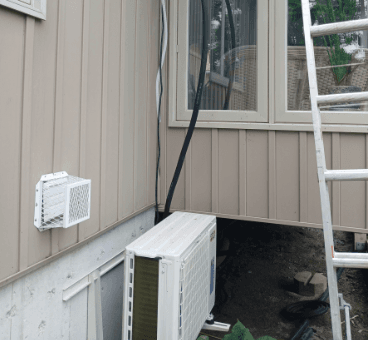
AC Installation in Barrie, Orillia & Simcoe County
Central air, ductless mini-splits, and heat pump installation. Free estimates, licensed technicians.

Good · Better · Best
Air Conditioners We Install
Real models we install across the GTA, Barrie & Simcoe County — pick the tier that fits, and we confirm the exact unit at your free quote. No pressure, no upselling.
Central Air Conditioners
All new AC units now use low-GWP R-32 refrigerant. The choice is staging: single-stage cools in one gear, while two-stage and inverter units run longer on low for better humidity control, quieter operation, and lower bills.
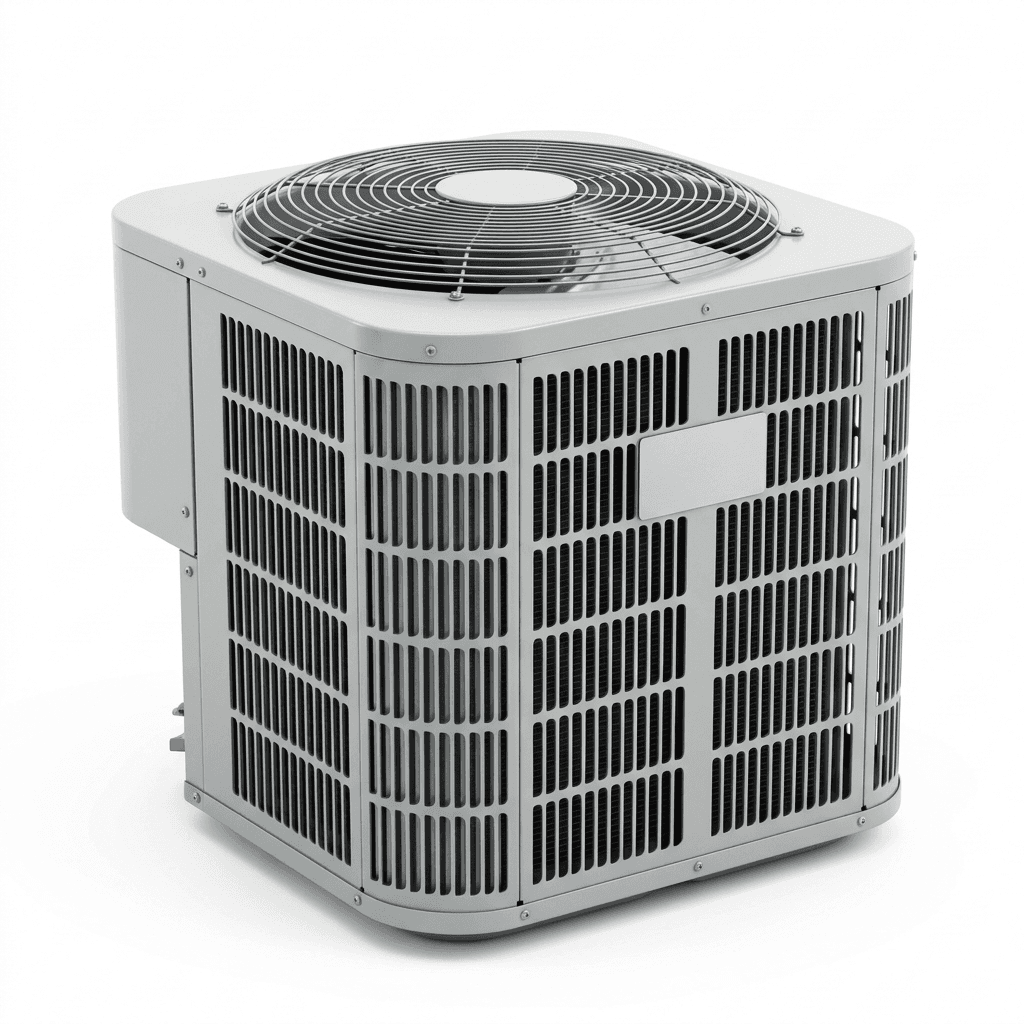
Runs mostly on low stage, so it removes more humidity and runs quieter than a single-stage unit — the difference between "cold" and "comfortable" on a muggy July afternoon. The popular middle pick.
- Efficiency
- Up to 17 SEER2
- Compressor
- Two-stage
- Refrigerant
- R-32 (low-GWP)
- Comfort
- Longer low-stage runs pull more humidity, quieter
Single-Stage Central AC
Goodman GLXS4
15.2
SEER2
Efficient, dependable cooling and the most affordable replacement.
Two-Stage Central AC
Carrier 24TPA7
17
SEER2
Two-stage cooling that keeps humid GTA summers comfortable.
Variable-Speed Central AC
Lennox SL25KCV
up to 26
SEER2
Variable-speed, ultra-quiet, and the most efficient cooling we install.
We size every system to your home (CSA F280) and confirm the exact model at your free in-home quote.
Relica Comforts installs central air conditioners, ductless systems, and heat pumps across Simcoe County, including Barrie, Orillia, Alliston and New Tecumseth, Innisfil, Bradford, Midland, Collingwood, Wasaga Beach, and nearby Lake Simcoe communities. We size every system for the home rather than relying on a rough square-footage rule.
A central air conditioner is a long-lived purchase — a good one runs for twelve to fifteen Ontario summers. So the goal at the quote stage is not to sell you the biggest or fanciest unit; it's to match the right size and efficiency to how your home actually uses cooling. Most of the difference between an AC you forget about and one that nags you comes down to two things done right: sizing and the match between the AC and your furnace blower.
There are really three decisions in any AC install — how hard the compressor runs (single-stage, two-stage, or variable-speed), how efficient the unit is (its SEER2 rating), and how it fits the rest of your system. We walk through each one below, say plainly who it's for, and confirm the home-specific details at your free quote.
Single-Stage, Two-Stage, or Variable-Speed?
How the compressor runs decides how quiet the unit is, how well it controls humidity, and what it costs. Here's who each one is for.
Single-stage
On or off, nothing in between. It's the budget choice and it cools the house fine. The trade-off is that it cycles on and off more often, runs louder when it's on, and controls humidity less precisely. A sensible pick if first cost is the priority and your summers are mild.
Two-stage
A high and a low setting, so it spends most of the summer running gently on low. That means steadier temperatures, quieter operation, and noticeably better humidity control on muggy GTA days. For a lot of homes this is the comfortable middle ground — more than single-stage comfort, less than inverter cost.
Variable-speed (inverter)
Modulates continuously to match exactly the cooling the house needs minute to minute. It's the quietest, dehumidifies best, and is the most efficient — the premium option. Worth it if you want the calmest, most even comfort and you run cooling a lot through the season.
Central air or a ductless mini-split?
If your home already has ductwork, a central air conditioner is the straightforward route — one outdoor unit and one thermostat cool the whole house evenly through the ducts you already have. For most GTA homes with a forced-air furnace, that's the simplest install.
If you don't have ducts — an older home, a boiler-heated house, an addition, or a room that's always too warm — a ductless mini-split does the same job without tearing the place apart. It mounts on the wall, cools room by room so you can set different temperatures in different spaces, and an inverter mini-split can run as a heat pump in the shoulder seasons too. We'll tell you which fits your home, and why, at the quote.
Our AC Installation Process
Free In-Home Assessment
We inspect your home, calculate the cooling load, and recommend the right system for your needs and budget.
Professional Installation
Our licensed technicians install your new AC system to code, typically completed in one day.
Testing & Warranty
We test the full system, set up your thermostat, and walk you through everything. All backed by warranty.
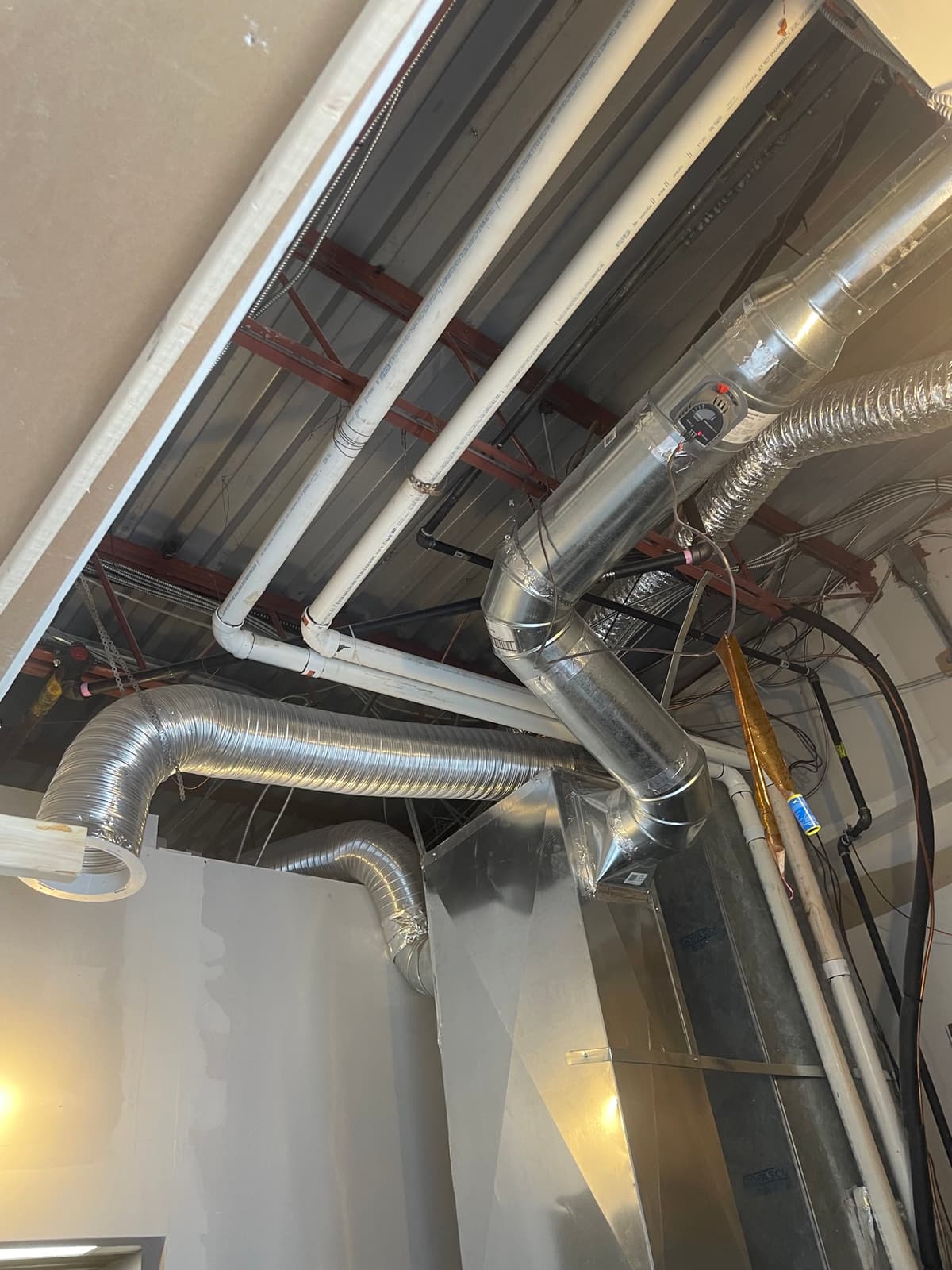
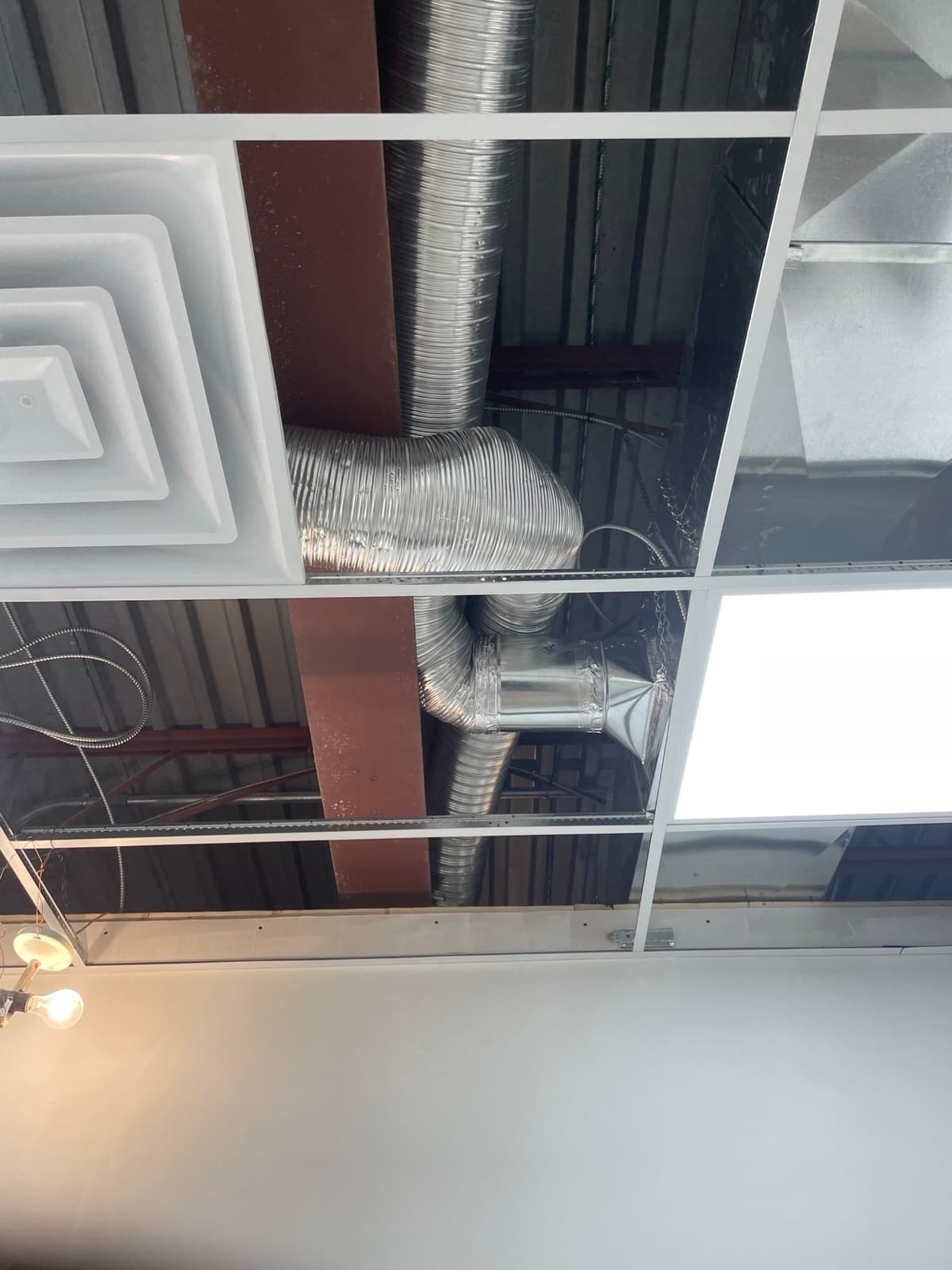
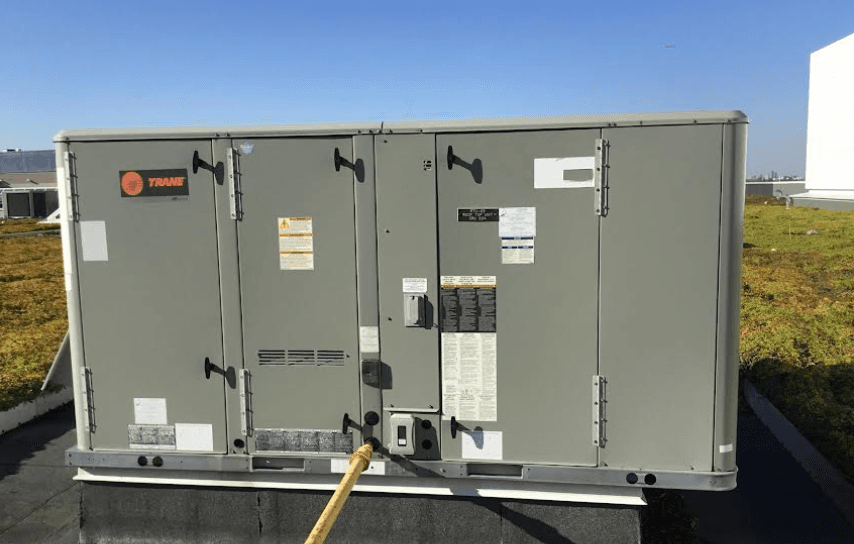
AC Installation — Real Work
How efficient should it be? Reading SEER2
SEER2 is the efficiency rating on an air conditioner — think of it like miles-per-gallon for cooling. A higher number means more cooling for each dollar of hydro, so lower summer bills. The “2” just marks the updated 2023 test method; because that test is tougher, SEER2 numbers read a bit lower than the old SEER numbers, so always compare a quote's SEER2 to another quote's SEER2, not to an old SEER figure.
Entry-level units sit around 14–15 SEER2; inverter units run past 20. For most Ontario homes, moving from an old unit up to roughly 17–18 SEER2 pays back over our cooling-heavy summers. Beyond about 18, the up-front cost climbs and our cooling season is short enough that the payback stretches out — unless you run the AC hard all season. Past that point, choosing a two-stage or variable-speed unit is usually more about comfort and quiet than about pure savings. We'll be honest about where the efficiency tier stops earning its cost for your home.
One thing worth knowing: a high-SEER2 air conditioner only delivers its rating if the rest of the system can keep up. The blower that moves the cooled air lives in your furnace, and an old single-speed furnace blower bottlenecks a high-efficiency AC. That's why a new AC and an aging furnace are often replaced together — so the system is properly matched. If your furnace is newer and in good shape, there's no need, and we'll say so.
Sizing, refrigerant, and when to replace
Sizing matters as much for comfort as for the bill. An oversized AC cools the air to temperature fast and then shuts off — but it never runs long enough to pull moisture out, so the house ends up cold and clammy at the same time. In a humid GTA summer that feels worse than a slightly higher setting with the humidity in check. An undersized unit runs flat out and still can't catch up on the hottest days. We size with a proper heat-gain calculation (CSA F280), not a tons-per-square-foot chart, then confirm it at your free quote.
All new 2026 units use a low-GWP A2L refrigerant — typically R-32 or R-454B — in place of the older R-410A. This is a regulatory change, not a choice you make. It does have practical consequences: you can't put A2L refrigerant into an old R-410A system, and the indoor coil and line set have to suit the new refrigerant, which is part of why a like-for-like component swap isn't always possible.
Repair or replace? Air conditioners last about 12 to 15 years. An old R-22 unit is the clearest case for replacement — R-22 has been phased out and a recharge is now very expensive — and R-410A systems are starting down the same road. A failed compressor on an older unit usually means replace. But plenty of smaller faults — a capacitor, a contactor, a fan motor — are worth repairing on a unit that still has years left. We'll tell you straight which side of that line yours is on.
Warranties. A new air conditioner typically carries a manufacturer's compressor warranty of 10 years (sometimes 12) and a parts warranty of 10 years when you register the unit, or 5 if you don't — so registration is worth doing. Labour on the install is covered separately by us. We'll lay out exactly what your unit comes with before you sign anything.
Worth Pricing First
Before you replace the AC, price a heat pump too
A heat pump cools your home in summer exactly like an air conditioner, and adds efficient heating through most of the year on top. So if you're already spending money to replace an AC, it's worth comparing the two — the heat pump can land close to the cost of an AC alone while doing more. Our cooling season here is shorter than the US South, so on the cooling side we'd steer you toward comfort and humidity features over chasing the absolute highest SEER2, and let the added heating value tip the math. We confirm the numbers at the free quote.
Read the full comparison on our heat pump installation page.
Need AC repair? See our AC repair services. Also explore furnace installation and plumbing installation.
Get a Cooling Quote
Fill out the form and we will get back to you shortly. No obligation.
Why Choose Relica Comforts?
- Licensed & insured technicians
- Upfront pricing — no surprises
- 24/7 emergency service
- Free estimates on all installations
- 5.0 stars on Google
Frequently Asked Questions

Ready to Stay Cool? Get a Free AC Estimate.
Call us anytime for emergency HVAC and plumbing service across Barrie, Orillia, and Simcoe County.